
Jul 02, 2025 | Flooring America
Sneezing the minute you walk through the door? Itchy eyes that get worse at home? We hear you. Allergies can make your favorite spot on the couch feel like a battle zone.
Our friendly flooring team has helped plenty of families in your shoes, and we're here to share what we know. Read on to explore how the right flooring, paired with a few simple habits, can help you create a more comfortable, allergy-conscious home.
If your allergy symptoms seem worse indoors, you're not imagining it. Our homes collect things like dust mites, pet dander, pollen, and mold spores. Every time we walk across a room, these tiny allergens can float up into the air and settle again later.
Your floor plays a part here. Some surfaces hold onto allergens more than others. Others let you wipe them away with ease. That's why picking the right floor is such a helpful step for anyone managing indoor allergies or asthma. No floor is truly allergy-proof, but the right one makes your cleaning routine a whole lot easier.
This is one of the questions we hear most. The honest answer is that it depends on the room and on your family.
Hard surfaces like hardwood, tile, and vinyl are smooth, so dust and pet dander sit on top where you can sweep, vacuum, or mop them up. That makes them a popular choice for allergy sufferers. Carpet has fibers that can hold onto allergens, so it needs a little more attention. But carpet brings warmth, softness, and comfort that many families love, especially in bedrooms and cozy living spaces.
Think of it as the right tool for the right room. Hard flooring shines in kitchens, entryways, and living areas. A low-pile carpet can be a lovely fit for bedrooms when you keep up with regular cleaning.
If you're ready to look at your flooring options, here are the ones our customers ask about most.
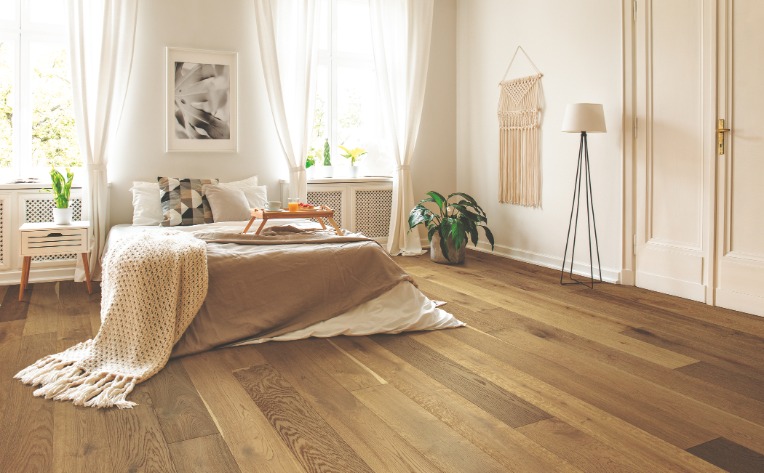
Hardwood has a smooth surface that gives dust and pet dander very little to cling to, so a quick sweep or vacuum is usually all it takes to keep things fresh. Engineered hardwood offers the same warm look and works well in a wider range of rooms in your home.
Luxury vinyl plank (LVP) and luxury vinyl tile (LVT) have a tight, smooth surface that's simple to wipe and mop. Many families love them for busy spaces because spills and muddy paw prints clean up fast. They also come in a wide range of looks, from wood to stone.
Ceramic and porcelain tile don't hold onto allergens, and they stand up well to mold-prone rooms like bathrooms and laundry rooms. Just keep the grout lines clean, since that's where dust and moisture can settle.
If you love the feel of carpet, you don't have to give it up. A few smart choices can make a big difference.
Wool is a natural fiber with a dense texture that many families find works well in allergy-conscious homes. It can also absorb some airborne particles like cooking fumes.
Nylon carpets are durable and easy to maintain, and their smooth surface makes vacuuming simple. They hold up beautifully in busy homes, so they're built for the long haul.
Polyester is a soft, comfy synthetic fiber that resists mold, mildew, and stains. It's a great pick for bedrooms and low-traffic spaces where you want a cozy feel underfoot.
Low-pile carpet has short, tightly woven fibers, which makes it easier to vacuum and gives allergens fewer places to hide. Plush carpet is lovely for its softness, and it works best in rooms where you can vacuum often. For allergy-sensitive spaces, a low-pile style is usually the better fit.
Want to learn more? Check out our Carpet Guide for details on carpet types and materials, and browse our carpet FAQ for quick answers to common questions.
Carpet padding does more than add cushion. The wrong kind can hold onto dust and moisture. Synthetic padding treated with an anti-microbial agent can help resist allergen buildup and keep your carpet fresher for longer.
Some flooring and materials ask for a little extra care when allergies are in the picture. Here's what we suggest keeping in mind:
The best floor in the world works even better with a good routine. Here's what we recommend to our own neighbors:
Our Carpet Care Guide has easy tips for tackling spills and keeping your carpet fresh for years.
Every room in your home works a little differently, and so does every family. A busy entryway might call for a tough, wipeable floor, while a quiet bedroom might be the perfect spot for soft, low-pile carpet.
If your home sees lots of foot traffic, take a look at our tips on the best carpet type for high-traffic areas.
Have a furry family member? Our pet-friendly carpet options are made for homes like yours.
Your home should be the place where you feel your best. With the right floor, a little know-how, and a simple cleaning routine, you can cut down on indoor allergy triggers and enjoy your space again. We're here for you every step of the way, with honest advice and a friendly ear. Contact us to talk through your options and find the floor that fits your family.